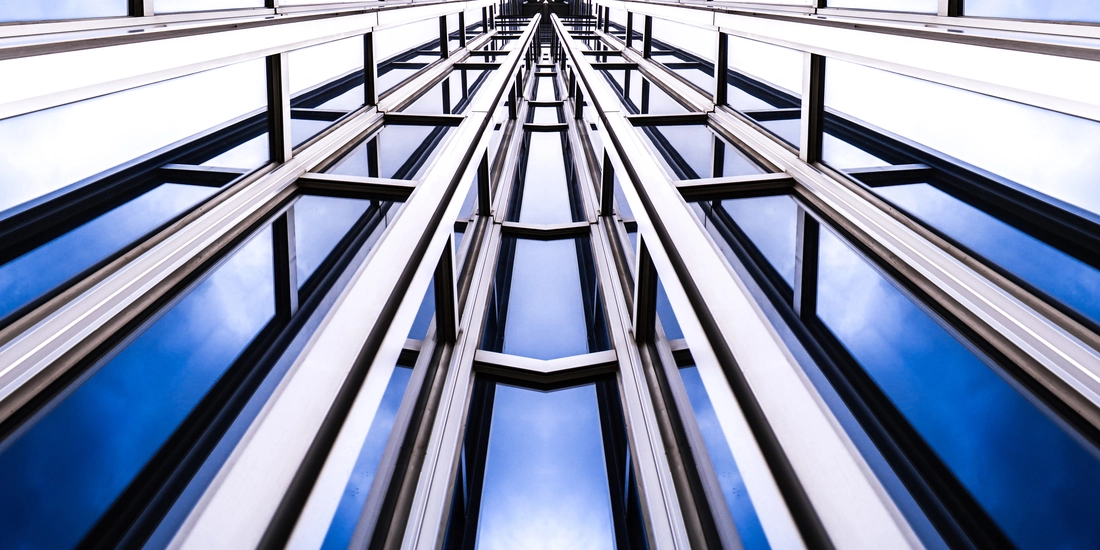
The fundamental challenge shaping architecture on large-scale construction sites is establishing a balance between gravity and the physical stresses acting upon the building envelope. Every solid raw material added to a building’s exterior imposes an additional mass load onto the main load-bearing columns and foundation. Thick stone blocks, marble, or massive cast slabs preferred in past years to ensure permanence transformed buildings into statically heavy structures. In modern projects located in seismic zones, these heavy envelopes directly jeopardize structural safety by increasing the building’s swaying force during seismic tremors.
The technological solution that eliminates these static constraints in highly visible modern projects is aluminum composite surfaces manufactured with a sandwich panel geometry. The Alutechbond product group offers a weight advantage of up to 85% compared to traditional marble claddings, thanks to its qualified core structure integrated between two thin metal sheets. This lightweight property, achieved without compromising strength values in the slightest, provides structural engineers with immense flexibility in expansive surface designs. It also delivers direct raw material optimization in iron and concrete budgets during the rough construction phase. The structural safety and load-bearing capacities of the metal elements forming the supporting sub-structure are technically documented with the internationally valid EN 1090-1 CE certification.
Time Management and Ease of Processing on the Construction Site
In projects with substantial investment budgets, the stability of the construction schedule is directly equivalent to the financial success of the project. Claddings that are difficult to size, cut, or shape on-site bottleneck construction processes. In contrast, aluminum composite panels can be processed with the flexibility of carpentry; they can be cut with millimeter tolerances on CNC lines, folded at angles, or bent for circular columns. These panels, practically interlocked into the lower carrier aluminum profile infrastructure with cassette systems, enable the rapid closing of the outer shell, paving the way for interior fine workmanship to begin without losing time. In the procurement and application processes of major projects, full compliance is maintained with the TSE Service Competency Certificate standards, which hold critical importance for projects and official tenders in the Turkish market.
Fire Safety in Buildings: Non-Combustible Composite Panels
Designing fire risk management in high-rise residential buildings, mixed-use projects, or commercial areas with intense human traffic is the most critical parameter of the architectural process. The seconds when flames breach windows and meet the outer shell during a fire determine the fate of the building. If low-quality materials with petroleum-derived, easily flammable polyethylene infills are preferred for the facade cladding, the facade creates a chimney effect on the vertical axis, carrying the flames to the top floors within seconds. This situation renders the safe evacuation of occupants impossible while entirely eliminating the possibility of external intervention.
Full compliance with international fire regulations in the building envelope is the only way to create life-saving time windows during a disaster. The mineral-cored Alutechbond series, manufactured with advanced technology at Sistem Aluminum facilities, transform exterior facades into a mechanical shield that halts the progression of flames. Enriched with inorganic fillers that do not deform when heated, these panels fully meet the safest surface cladding standards required by legal specifications in high-rise construction sites and projects where fire sensitivity is paramount.
Alutechbond A2 and B1 Core Technology
The resistance of composite panels against fire is determined by the core structure located internally and hidden from the naked eye. According to the floor heights and risk analyses of projects, two primary qualified infill classes stand out:
- Alutechbond A2 Class: Thanks to its mineral-filled core, it holds the A2-s1, d0 rating in European standard fire tests. It absolutely does not ignite even at high furnace temperatures (A2), does not release toxic smoke or suffocating gases (s1)—the leading cause of fatalities—and does not drop molten flaming droplets (d0) that could carry flames to lower floors. It is indispensable for hospitals and skyscraper facades.
- Alutechbond B1 Class: These series, matching the flame-retardant B-s1, d0 standards, delay the propagation speed of the flame when directly exposed to a fire source. With its self-extinguishing structure once the heat source is removed, it provides an optimum balance of safety and budget for mid-rise residential and commercial projects.
The Power of Aluminum Composite Panels in Modern Public Buildings
City hospitals, airport terminals, courthouses, university campuses, and administrative management centers… Public buildings are monumental structures that reflect a country’s modern architectural vision and institutional gravity to society. When planning the exterior facades of these projects built with public budgets, performance criteria are kept at the highest limits. These buildings must remain unaffected by outdoor conditions for decades without fading, and without incurring operating expenses such as painting, renovation, or heavy chemical cleaning that place a continuous burden on the state budget.
Serving as armor that protects public investments, aluminum composite panels deliver both aesthetic formality and structural permanence in extensive public construction sites. The Alutechbond product imparts a dynamic and modern face to state projects with its smooth monolithic surface structure. The material’s natural corrosion immunity and lightweight property directly facilitate the operation of large-scale public spaces under the highest efficiency principles, both during the construction phase and throughout their lifespan.
Zero Maintenance and Durability Standards in Public Spaces
The exterior surfaces of public structures are continuously exposed to industrial exhaust gases, acid rain, and intense sunlight. The liquid fluoropolymer-based PVDF coating technology used on the outer layer of Alutechbond panels forms a cellular-level protective barrier against these corrosive elements. Surface coating processes are certified in accordance with QUALICOAT norms, the international electrostatic powder coating standards. Thanks to its non-porous surface structure that repels soot and dust, the panels can remain clean by being washed merely with natural rainwater. This prevents the unnecessary consumption of public resources during maintenance and repair processes.
Alutechbond Panel Design on Wide-Span Facades
The common design character of architectural projects like showrooms, convention centers, logistics warehouses, and massive sports arenas is their wide facade spans extending dozens of meters. As the building volume grows, the mechanical stresses on the outer shell become increasingly complex. While the positive pressure and negative suction forces exerted by the wind multiply across expansive surfaces, the thermal expansion movements resulting from diurnal temperature transitions are felt on a much broader scale.
When solid metal sheets or standard claddings are preferred for wide-span facade projects, the most prominent aesthetic defect encountered is wrinkling and warping (oil-canning) on the surface. Thanks to their sandwich panel strength, Alutechbond aluminum composite panels display high rigidity (bending resistance) even when applied in massive plate dimensions, thereby preserving monolithic surface smoothness (flatness). The panel design, which distributes dynamic loads evenly to the lower carrier profile systems, ensures that structures maintain their static stability within safe limits even during stormy weather adversities.
Thermal Expansion Management and Smart Joint Engineering
Aluminum is naturally an active metal that expands in summer heat and contracts during winter months. In wide-span facade designs, absorbing these millimeter-scale flexes is vital for structural integrity. Fixing Alutechbond panels to the carrier framework with cassette installation details allows each plate to move freely at a micro-level along its own axis. Smart joint gaps left between panels and supported by EPDM gaskets absorb thermal expansion stresses, completely eliminating the risk of tension, tearing, or permanent deformation on the facade.
Frequently Asked Questions (FAQ)
1. What is the financial contribution of aluminum composite panel lightweighting to the building’s foundational statics in exterior designs?
Alutechbond panels are up to three times lighter compared to solid steel sheets and offer up to an 85% weight reduction compared to marble and granite. Lightening the facade cladding reduces the total mass (dead load) of the building by thousands of tons. This allows structural engineers to optimize the building’s foundation design, as well as column and beam dimensions. Since iron and concrete consumption decreases directly during the rough construction phase, significant cost savings are achieved in the total project budget.
2. How do mineral-filled Alutechbond A2 panels prevent smoke emission at high furnace temperatures?
A vast majority of fatalities during a fire result from suffocating gas and smoke poisoning released by burning building materials rather than direct flame contact. The magnesium hydroxide-based inorganic mineral core at the center of Alutechbond A2 panels is formulated to molecularly avoid generating smoke (under s1 class standards) even when facing high heat waves. This technical feature keeps escape corridors clear during a fire, allowing occupants and firefighting teams to complete evacuation operations safely.
3. What is the color fading resistance of composite panels in coastal projects or dense industrial zones?
Intense salty humidity along coastlines or acidic gases emitted from chimneys in industrial zones rapidly cause cracking, peeling, and color fading in ordinary facade paints. The high-performance PVDF fluoropolymer surface coating layers on the outer surface of Alutechbond panels create a fully impermeable barrier against ultraviolet (UV) rays and chemical corrosion. Because the anodized coating quality during production is guaranteed by international QUALANOD standards, and the paint quality by QUALICOATcertification, the panels preserve their mechanical form under extreme atmospheric conditions.
4. How are Alutechbond panel thicknesses determined in wind load calculations for wide-span facades?
Wind load analyses are calculated using computer-aided structural software based on the meteorological wind map of the geography where the building is constructed, the total height of the structure, and the span metric of the facade. According to the pressure values obtained (kN/m2), the wall thickness of the panels (4mm, 6mm, etc.) and the application frequency of the vertical-horizontal aluminum profile framework backing the sheet are engineered with millimeter precision. This guarantees facade safety even during the severest storms.
5. What is the role of Alutechbond panels regarding sustainable regulations and green building certification (LEED / BREEAM)?
Aluminum is a green raw material that can be infinitely remelted and included in the manufacturing cycle without any degradation to its molecular structure or alloy quality. The industrial discipline using closed-circuit water circulation systems in production processes aligns the Alutechbond series with internationally valid EPD (Environmental Product Declaration) certifications. This verifiable scientific data directly facilitates projects in achieving the highest scores and being certified under green building audits.
Functional Safety and Aesthetic Integrity in the Building Envelope
Choosing the correct aluminum profile infrastructure and Alutechbond composite panels for the exterior surfaces of large-scale projects ensures that creative design lines blend flawlessly with the laws of physics on the construction site. Production processes operate in full compliance with the internationally recognized ISO 9001 Quality Management System, ISO 14001 Environmental Management System, ISO 50001 Energy Management System, and ISO 45001Occupational Health and Safety Management System standards, which validate the operational safety of the facilities. (Our Certificates: https://www.sistemal.com/en/certifications/)
Furthermore, thanks to the Authorized Economic Operator (AEO) status held, customs and logistics processes are optimized, ensuring that materials reach the construction site Just-In-Time. System details that successfully pass seismic flexibility, wind tunnel stresses, water impermeability, and fire chamber evaluations in accredited testing laboratories secure buildings against all corrosive dynamics of the external world.
While combining the lightweight capability of aluminum with the ripple-free, crisp surface form of Alutechbond, we unite material quality and manufacturing discipline within a single technical vision. This industrial discipline displayed at every step—from the molding phase to installation workmanship—does more than just grant cities a modern silhouette; it permanently reduces operating expenses, protects resources, and delivers cost-free, safe, and long-lasting structural infrastructures to the industrial world.