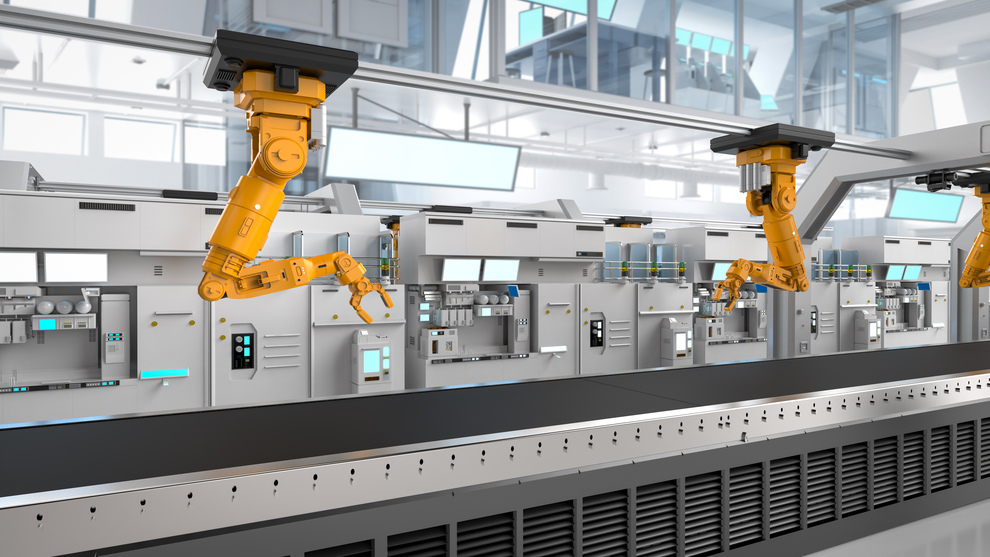
In the era of Industry 5.0, production areas are transforming from static belt systems into dynamic, flexible cells that can be easily reconfigured. Aluminum profiles, with their high strength-to-weight ratio, are the most critical building blocks of this transformation. Aluminum sigma profiles, which can be assembled much faster than steel constructions, require no welding, and offer a modular structure, reduce the installation and update times of automation lines by up to 50%.
In the current period, Sistem Aluminum maintains the highest standards for dimensional stability and surface smoothness in the profiles it produces for the automation sector. This precision reduces the load on motors by lowering friction resistance, especially in linear motion systems and sensitive measuring devices, thereby increasing energy efficiency.
Modular Chassis and Conveyor Systems in Smart Factories
The chassis, which forms the foundation of automation lines, is the main backbone carrying all the dynamic loads of the system. T-slotted profiles produced in Sistem Aluminum‘s high-tech extrusion lines allow complex structures to be set up in seconds using standard nut and bolt connections. This modularity ensures that any revision to the production line can be carried out without needing to shut down the facility for days. The advantage of weld-free assembly also prevents thermal stresses on the material, preserving the geometric accuracy of the system.
Carrier systems and aluminum bodies designed for collaborative robots (cobots)—the focus of Industry 5.0—minimize inertia during stops while increasing the robot’s acceleration capacity. By using special alloys, Sistem Aluminum improves the vibration damping properties of these profiles, helping robotic arms operating at high speeds maintain their positioning precision. This balance between the metal’s natural modulus of elasticity and alloy hardness minimizes the margin of error in repeatable work processes.
Precision Motion Systems and Linear Rail Integration
In the world of automation, accuracy is measured in micron-level tolerances. Linear rails and moving bearings integrated into the internal channels of aluminum profiles depend directly on the planarity of the profile. Through digital control mechanisms applied during the extrusion process, Sistem Aluminum reduces deflection and warpage rates below international norms, providing a flawless foundation for linear motion.
These profiles, used especially in CNC machines, 3D printers, and automated packaging lines, preserve their surface form even in harsh industrial conditions thanks to wear-resistant anodic coatings. The high thermal conductivity advantage of aluminum contributes to the passive dissipation of heat from heavy-duty motors and drives through the profile body, extending the life of electronic components. This thermal management capacity is a critical engineering advantage for maintaining temperature balance in enclosed automation systems.
Sustainability and Human-Centric Production Areas
Industry 5.0 centers on sustainability and worker well-being alongside technology. The 100% recyclable nature of aluminum, combined with Sistem Aluminum’s “Green Aluminum” vision, helps factories reduce their carbon footprint. Furthermore, the aesthetic and clean appearance provided by aluminum enhances the ergonomics and visual quality of industrial workspaces, creating environments where human-machine interaction is more efficient.
The factories of the future will be spaces where speed meets intelligence and power meets lightness. By combining metallurgical expertise with the high standards of Industry 5.0, Sistem Aluminum continues to produce strategic solutions that add flexibility, speed, and reliability to automation projects worldwide. This innovation-oriented approach guarantees that industrial systems are compatible not only with today’s needs but also with the production requirements of the future.