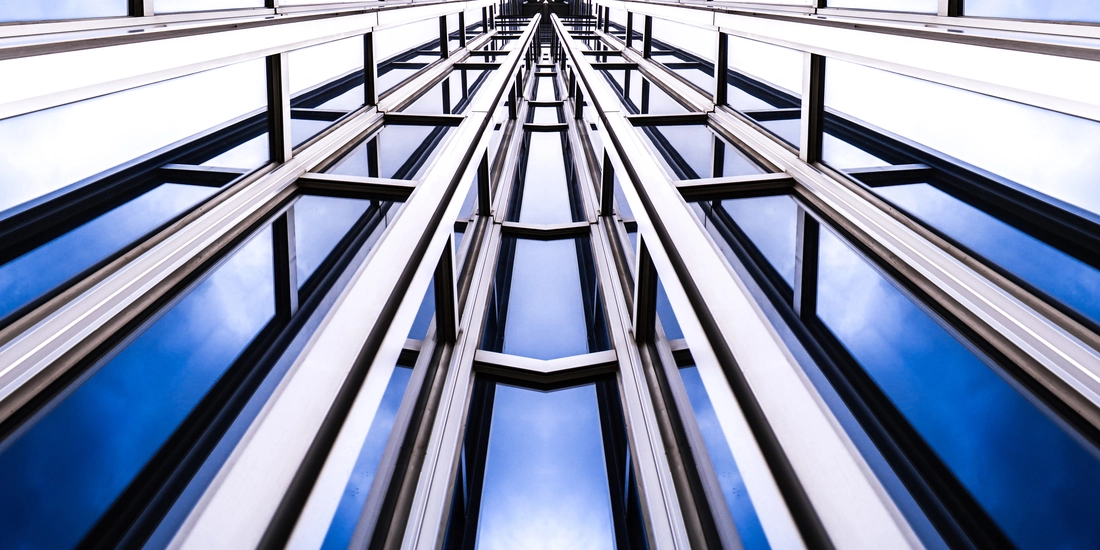
1. Introduction: The New Carbon-Focused Competitive Order in Global Markets
The global industry, manufacturing, and construction sectors are experiencing one of the most fundamental structural transformations in history. In past years, while the success of a material was measured solely by mechanical strength tables, unit raw material prices, or supply speed, in today’s world, the most critical parameter of the commercial equation has become the amount of embodied carbon the material contains. The preservation of atmospheric balances, the limitation of carbon emissions, and the green regulations added to international trade agreements mandate a radical material revision in every field, from industrial facilities to mega architectural projects.
In particular, carbon border adjustment mechanisms centered in the European Union are no longer merely raw statements of intent for heavy industry and export-oriented production facilities; they manifest directly as financial customs duties and trade barriers. In this new world order, the survival of projects and manufacturers in the global arena depends on minimizing the greenhouse gas footprint, namely the carbon footprint, left by the raw material supply chain from its source to the construction site. In the world of metallurgy and building envelope engineering, the most strategic element capable of simultaneously responding to these demanding environmental and performance criteria is sustainable aluminum technology.
2. Sustainable Aluminum Engineering That Reduces the Carbon Footprint
Aluminum, by its nature, is a unique metal that offers a combination of lightness, high corrosion resistance, and flexible machinability required by modern industry. However, the path to establishing a sustainable ecosystem cannot be limited solely to the advantages of the material during its use; the energy consumption profile during the production phase of the material must also be scrutinized. While obtaining primary aluminum from scratch requires high primary energy consumption, new generation technological investments in the metallurgy sector are shifting this process entirely to a green energy model.
Meeting the electricity used in production facilities from renewable sources, especially solar power plants (SPP), radically lightens the emission load of aluminum during the production phase. When high-quality industrial and architectural profiles shaped in press lines are processed with this green energy discipline while in the raw material stage, the embodied carbon rates are drawn to the lowest limit levels. These sustainable profiles, shaped by Sistem Aluminum engineering, reduce the total carbon load of large-scale construction sites while providing projects with financial and operational advantages. Alutechbond aluminum composite panels, which cover this eco-friendly profile infrastructure on the outer shells of facilities, provide a monolithic aesthetic in wide surface spans while creating a holistic protective armor that maximizes the building’s durability life against external factors.
The Infinite Cycle of Metal and the Recycling Economy The most fundamental and inimitable mechanical feature that makes aluminum sustainable is that it can be melted down and included in the manufacturing cycle infinitely and 100% without any deterioration in its molecular structure, quality, and structural resistance. Compared to producing primary aluminum from scratch from primary ore deposits, melting recycled scrap and production waste and bringing them into the economy as secondary aluminum reduces the required electrical energy need by exactly 95%. While this tremendous energy saving prevents the consumption of limited raw material resources in nature, it enables industrial facilities and large construction sites to fully adapt to the circular economy model. Each vertical and horizontal mullion profile coming off the press lines is actually a permanent raw material reserve transferred to the world of the future, rather than a waste that burdens the environment.
3. Low-Carbon Aluminum Strategy in Green Building Projects
International real estate investors, major institutional fund providers, and visionary architects follow strict sustainability audits to register the commercial value of the mega projects they realize and to gain prestige in the global market. The ability of a skyscraper, an airport terminal, a city hospital, or a university campus to gain eco-friendly green building status is not measured solely by how little water or electricity it consumes during operation. The most decisive criterion of these audits is how clean and low-emission methods are used to produce all the building elements utilized during the construction phase of the building at the cellular level. Aluminum, which forms the backbone of wide transparent facade designs, modular cladding systems, and large industrial spans, is one of the most strategic elements that determine the fate of the project in these green building scoring systems.
Preferring low-carbon aluminum profile systems and Alutechbond composite panel solutions in the building envelope lightens the environmental load of buildings at the initial stage, directly enabling access to the highest scoring brackets in global inspection mechanisms. The lightness advantage offered by Alutechbond panels reduces the static dead load placed on the reinforced concrete load-bearing skeleton of the building, triggering an indirect carbon and cost savings in concrete and iron consumption during the rough construction phase.
Energy Saving and Thermal Barrier Engineering In green building projects, not only the cleanliness of the material during the production phase but also the insulation performance it will exhibit throughout the operational life of the building is strictly examined. Wide transparent surfaces and metallic facade lines are prone to creating a thermal transfer bridge between interiors and the external environment when correct insulation details are not constructed. Composite thermal breaks with minimum conductivity, placed in the inner geometry of aluminum profiles, cut these thermal bridges at the micron level and keep the air conditioning load of the interiors under control. This holistic engineering discipline, integrated with argon gas-filled multi-layer glass units and the insulated cassette assembly architecture of Alutechbond panels, permanently lowers the electricity consumption spent by buildings for heating and cooling. This insulation power transforms mega structures from being passive masses that emit carbon into the environment into highly efficient smart systems that preserve their own energy.
4. The Advantage of EPD-Certified Profiles in International Projects
In cross-border real estate investments, global infrastructure tenders, and international corporate projects, abstract promises, ambiguous corporate statements, or unproven product catalogs have now completely lost their validity. Today’s construction and industry sectors mandate verifiable technical certificates that are entirely based on scientific data and audited by independent international accredited organizations. The EPD certificate is the most rigid and mandatory technical barrier that engineers and purchasing professionals face when doors, windows, curtain walls, or industrial profile systems are questioned in international architectural specifications.
EPD (Environmental Product Declaration) is a scientific identity document that transparently reveals the entire life cycle (LCA – Life Cycle Assessment) of a product according to international ISO standards, starting from the extraction of its raw material from the mine, its processing in the factory, transportation processes, its service life at the construction site, and even its behavior in recycling facilities when it completes its service life. EPD-certified aluminum profiles and Alutechbond composite panel series are the strongest green passports that ensure the brand and systems progress safely in global markets without encountering technical obstacles in international projects. This certification power provides projects with full transparency, traceability, and technical reliability on a global scale.
| Performance Criterion | Traditional Heavy Claddings / Standard Metals | Sustainable Aluminum & Alutechbond Systems | Long-Term Financial and Technical Contribution to the Project |
| Carbon Footprint | High primary energy consumption and fossil fuel dependency. | Renewable energy (SPP) and 100% recycled raw material usage. | Full exemption from carbon border tax risks, priority rights in global tenders. |
| Static Weight Load | High dead load; enlarges the dimensions of reinforced concrete and steel frames. | 1/3 weight compared to steel; high rigidity with sandwich panel structure. | Optimization in rough construction iron-concrete costs, seismic flexibility during earthquakes. |
| Operation and Maintenance Cost | Requires periodic paint, polish, facade repair, and heavy cleaning budgets. | Non-rusting, non-rotting structure; self-cleaning with PVDF surface protection. | Zero additional operating expenses for decades, permanent preservation of corporate aesthetics. |
| Thermal and Energy Management | Open to thermal bridges; increases the air conditioning and ventilation load. | Composite thermal break and ventilated facade integration. | Permanent decrease in heating and cooling electricity bills, high energy efficiency. |
| International Certification | Lack of verifiable scientific data; non-transparent production processes. | Objective EPD (Environmental Product Declaration) certification in ISO standards. | Direct access to the highest scoring brackets in LEED and BREEAM ratings. |
5. Static Stability, Functionality, and Security Synergy in the Building Envelope
Preferring the correct aluminum profile infrastructure and highly qualified Alutechbond composite panels on the exterior of large-scale industrial facilities or prestigious architectural projects ensures that the visionary lines at the design stage perfectly coincide with the harsh laws of physics on the construction site. Exterior cladding is not merely the aesthetic dress of a building; it is the most important structural defense line that protects the building and the human life within it during disasters, storms, or seismic shocks. Profile cross-sections, which emerge with full marks from wind tunnel pressures, seismic movement flexibilities, and waterproofing tests in accredited test laboratories, protect structures against all the abrasive dynamics of the outside world.
In addition to this, fire risk management is the most critical audit stage in public buildings, skyscrapers, hospitals, and industrial facilities where human circulation is intense. Mineral-filled core technologies, developed to ensure full compliance with fire safety standards, transform aluminum facades into a mechanical barrier that stops the spread of fire on the vertical axis. The Alutechbond A2 (Non-Combustible) and B1 (Hardly Flammable) series preferred on the exterior strictly do not catch fire, do not form flaming droplets, and physically prevent the release of toxic smoke (in s1 class standards), which is the main cause of fatalities, even if they are exposed to high temperatures. This high safety character of the material creates life-saving critical timeframes so that the occupants of the building can be safely evacuated in the event of a potential emergency.
6. The Safe, Economical, and Eco-Friendly Structural Legacies of the Future
Melting engineering accuracy, industrial production discipline, and an eco-sensitive green industry vision in a single melting pot means building the future of modern urbanism and architecture. When the unlimited geometric design flexibility offered by aluminum extrusion technology comes together with the waveless, flawless surface clarity of Alutechbond, the free dreams of architects and engineers turn into reality on construction sites without being hindered by any static or technical obstacles.
The industrial expertise exhibited at every step, from raw material selection to the molding stage, from advanced surface treatments to ease of assembly at the construction site, not only gives our cities an aesthetic, modern, and respectable silhouette; it also permanently minimizes operating costs and preserves natural resources, thereby guaranteeing the safest, most economical, cost-free, and nature-friendly structural infrastructures to be transferred to future generations. Every facade clad with the right material and advanced engineering decisions is the most sustainable and stable structural legacy left to the world of tomorrow.